What we do on the job, and what it means for your house
| What happens |
What it means for you |
| The work area gets sealed in plastic and held under negative pressure |
Spores stay where we’re working instead of riding the AC into the bedrooms |
| Drywall, insulation, carpet pad, and trim that got wet and moldy come out; studs, joists, and slab get cleaned where they stand |
The material that can’t be saved leaves, and the structure that can be saved stays |
| Everything removed is bagged inside the containment before it moves |
Nothing moldy gets carried open through the living room |
| Cleaned framing is HEPA-vacuumed, wiped, and left open until it reads dry |
New drywall never goes over wet wood |
| We find where the water came from and tell you what has to change before the removal will hold |
A removal with the moisture still running is a repeat job, and we would rather do it once |
| You get a written report of what came out, from where, and why |
Louisiana law requires it, and it’s what a buyer, a tenant, or an adjuster asks for |
Mold You Can’t See Yet
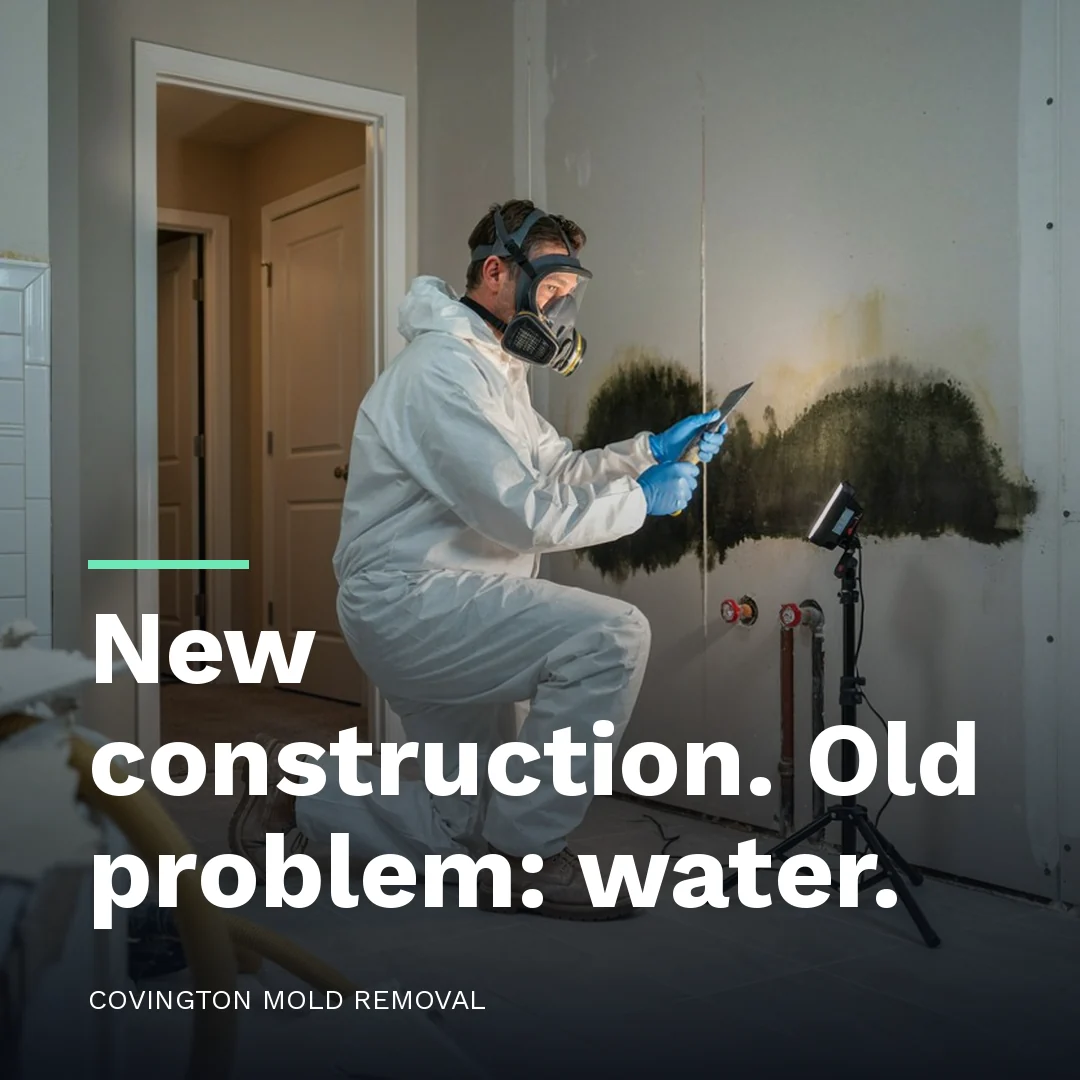
EPA lists where mold commonly hides around the home: the back side of drywall and wallpaper, the underside of carpet and pad, inside wall cavities around pipes, above ceiling tiles, and inside ductwork. Every one of those is out of sight in a finished house, which is why the first sign in a newer subdivision is so often a smell or a stain rather than a patch of growth.
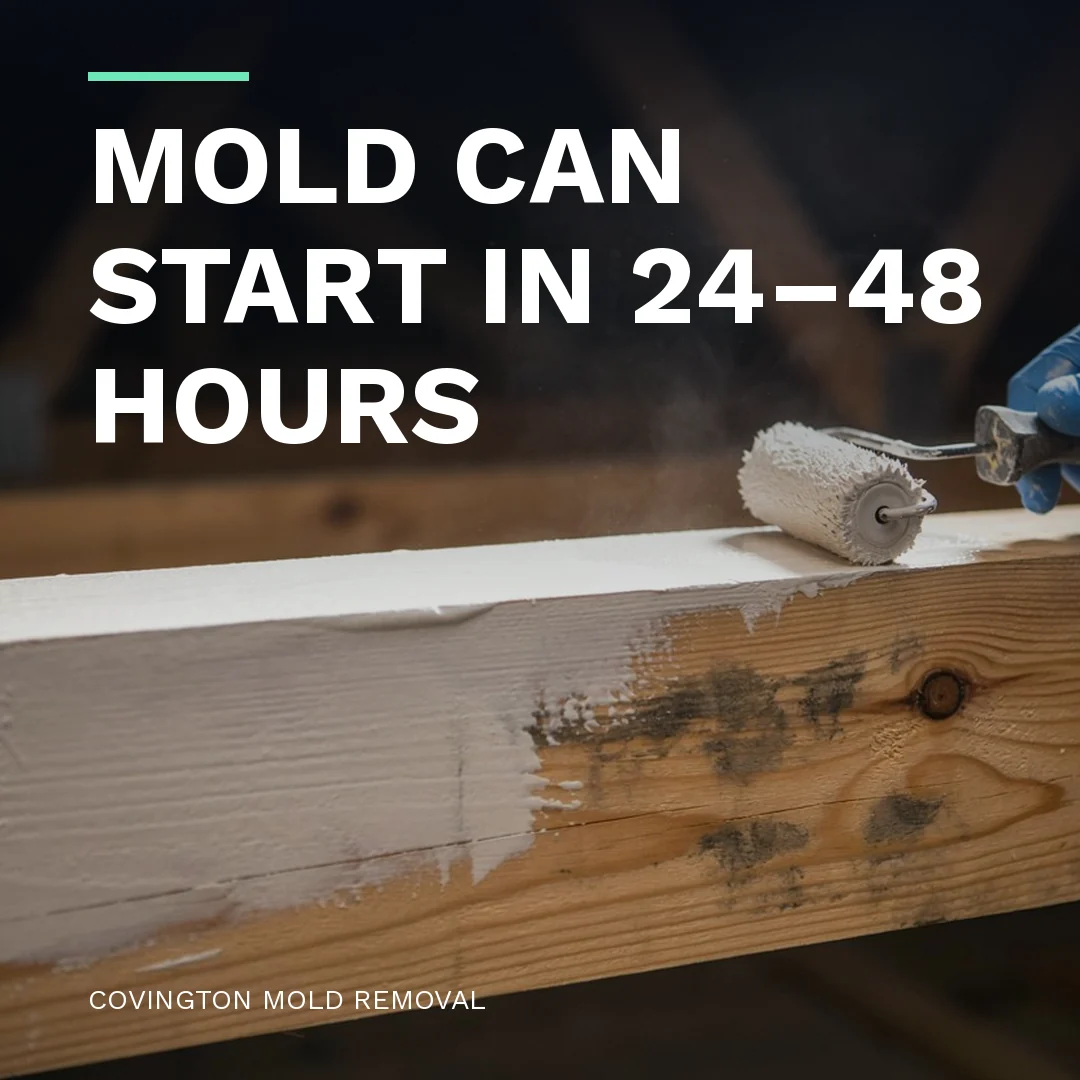
EPA’s timeline is that wet materials can begin supporting mold within 24 to 48 hours. In a house that gets a good breeze through it, some of that dries. In a house that is sealed and cooled, with early-morning humidity across south Louisiana averaging about 88 percent by NOAA’s normals, the inside of a wall doesn’t get that chance. Cool inside. Humid outside. Moisture finds a way.
Small Area. Smart Time To Act.
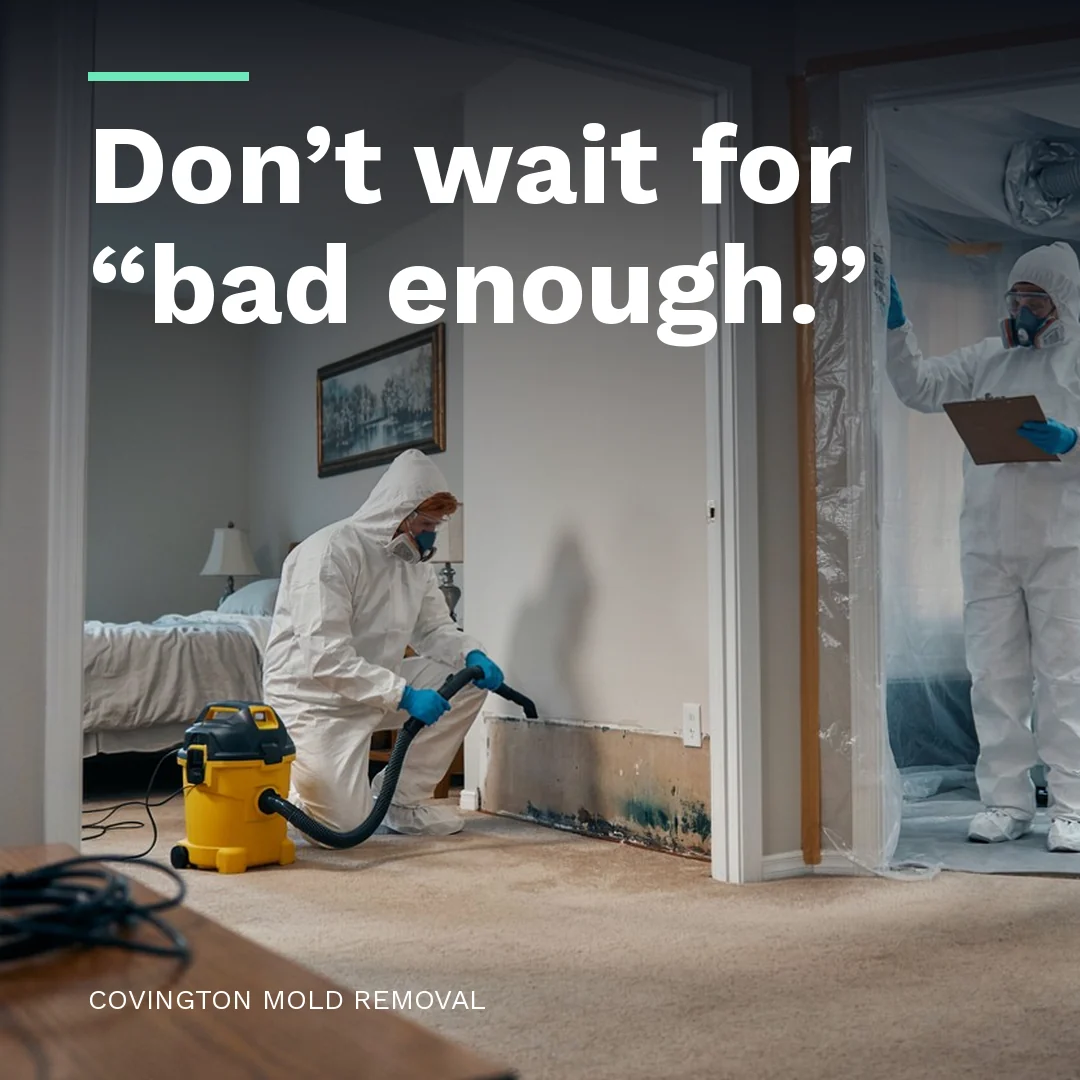
Waiting rarely makes removal easier. A patch the size of a dinner plate on a bathroom ceiling is a morning’s work. The same patch six months later, after the ceiling drywall has wicked water toward the wall and the insulation above it has stayed damp, is a ceiling, a wall, and an attic. Don’t wait for “bad enough.”
The same goes for cleaning it yourself. EPA’s guideline is that a homeowner can clean a hard surface up to about ten square feet. Past that, or on drywall, insulation, or carpet, a little DIY cleanup can turn into a much larger removal project — scrubbing spreads spores, bleach wets the material without reaching the growth inside it, and paint over the top hides the stain until it comes through again. EPA says not to paint or caulk over mold and doesn’t recommend bleach as a routine practice.
After The Leak
Louisiana ranks fourth in the country for hurricane landfalls, and the Northshore has taken its share: Katrina’s surge across the Mandeville lakefront in 2005, Ida’s wind and rain in 2021, and the river flooding in between when the Tchefuncte and the Bogue Falaya come out of their banks after a wet week. Louisiana’s Department of Health said it plainly after Ida — clean up mold only after every pathway for moisture into the structure has been closed.
The storms are the memorable part. Most of the mold we remove around Covington and Mandeville has nothing to do with them. It comes from a supply line behind a refrigerator, a shower pan that seeped for a year, a drain line off the attic air handler that backed up in July, a window that leaks in a north wind. After a sudden leak, photograph the wet area, the source, and the date before anything gets pulled out — if an insurance claim may be involved, that record is what an adjuster asks for. And never assume mold damage will automatically be covered; policies generally pay for sudden events and exclude slow leaks and humidity. If it reached the ductwork, HVAC and duct mold remediation covers what that looks like.
Renting In St. Tammany?
Louisiana law makes a landlord responsible for defects in a rental whether or not the landlord knew about them, and tenants can’t withhold rent to force repairs. Both sides get to the same place faster by having the growth removed and documented. Landlords: the written report is your record. Tenants: tell us you’re renting when you call, and we write the report with that in mind.
Selling The House?
Louisiana’s property disclosure form asks sellers directly whether the house has had mold, water intrusion, or flooding. A known problem left off the form can come back as a rescission or damages claim inside a year of closing. A known problem that was removed and documented is one line on the form and a report in the folder — and on the Northshore, where a lot of buyers are relocating from the south shore and asking hard questions about water, that folder helps.
Not Sure It’s Serious?
Start with a conversation. Tell us which room, what you’re seeing or smelling, and what got wet — a roof, a pipe, a storm, the river, or nothing you can find. If we’re able to answer you’re connected immediately; otherwise we set a callback time and tell you which number will call.
We take calls from Covington, Mandeville, Madisonville, Abita Springs, Folsom, Goodbee, Bush, and the subdivisions between them. All of them are on the areas page.
Call and describe what you’re seeing.